
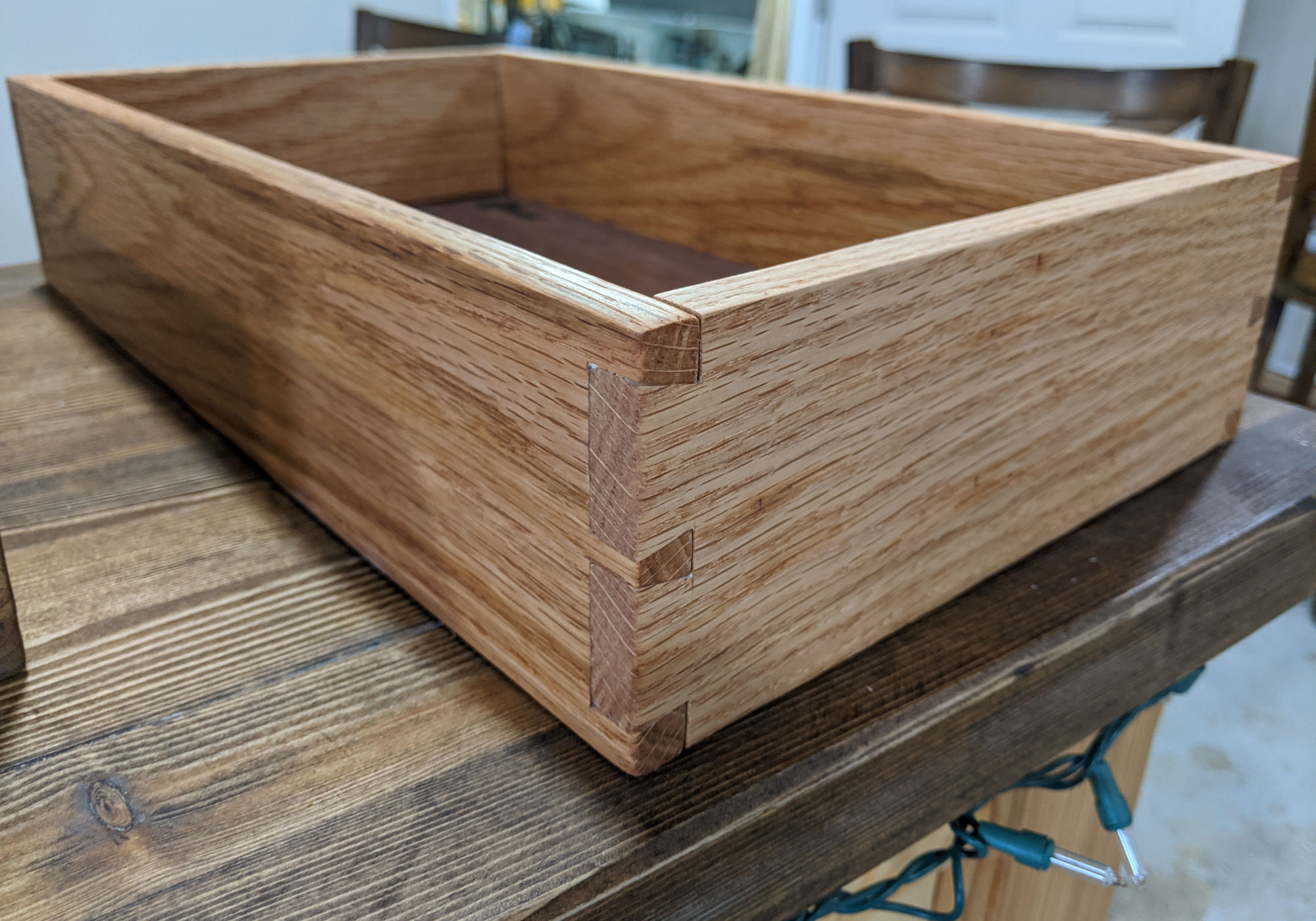
Dovetails, mortise-and-tenon, breadboard ends — the joinery vocabulary every collector should know.
Modern manufacturing has a lot of clever shortcuts — pocket screws, dowels, biscuits, ready-to-assemble cam locks. They work. None of them last like real joinery.
The through dovetail is the gold standard for drawer boxes: a self-locking joint that gets stronger as wood expands and contracts. You can spot one instantly on a hundred-year-old chest.
Mortise-and-tenon is the backbone of frame-and-panel construction — chair legs, door frames, table aprons. Done right, the joint outlives every glue ever made.
Breadboard ends keep wide tabletops flat by allowing the field to move seasonally while the end cap stays straight. The slotted dowels hidden inside are a small detail no factory uses.
Half-blind dovetails, sliding dovetails, and drawbored mortises round out the studio's daily vocabulary. Every Timberwick piece uses at least three of these joints — visible or not.